
Buying land is one of the biggest financial decisions most Kenyans will ever make. Done right, it gives you a place to build, an asset that tends to grow in value, and something to pass on to your children. Done carelessly, it can cost you your savings and years in court.
The good news is that the process is not complicated once you understand the steps. This guide walks you through them in order, from deciding what you want to collecting your title deed.
Step 1: Decide why you are buying
Before you look at a single plot, be clear about your goal, because it changes what you should buy.
- To build a home soon: you need a plot with water, electricity, an access road and neighbours already living nearby.
- To build rental units: look for areas near towns, colleges, industries or main roads where people want to rent.
- To hold as an investment: you can buy further out, where prices are lower, in an area where roads and services are coming.
Write down your budget, including the extra costs of transfer (more on that below), and how soon you want to use the land.
Step 2: Choose the area
Location decides almost everything: price, how fast the land appreciates and how easy it is to live there. When comparing areas, look at:
- distance and travel time to the nearest town and to Nairobi or your city
- the road: tarmac, murram, or a track that floods in the rainy season
- water and electricity: already on site, nearby, or far away
- schools, hospitals, markets and transport
- whether people are already building
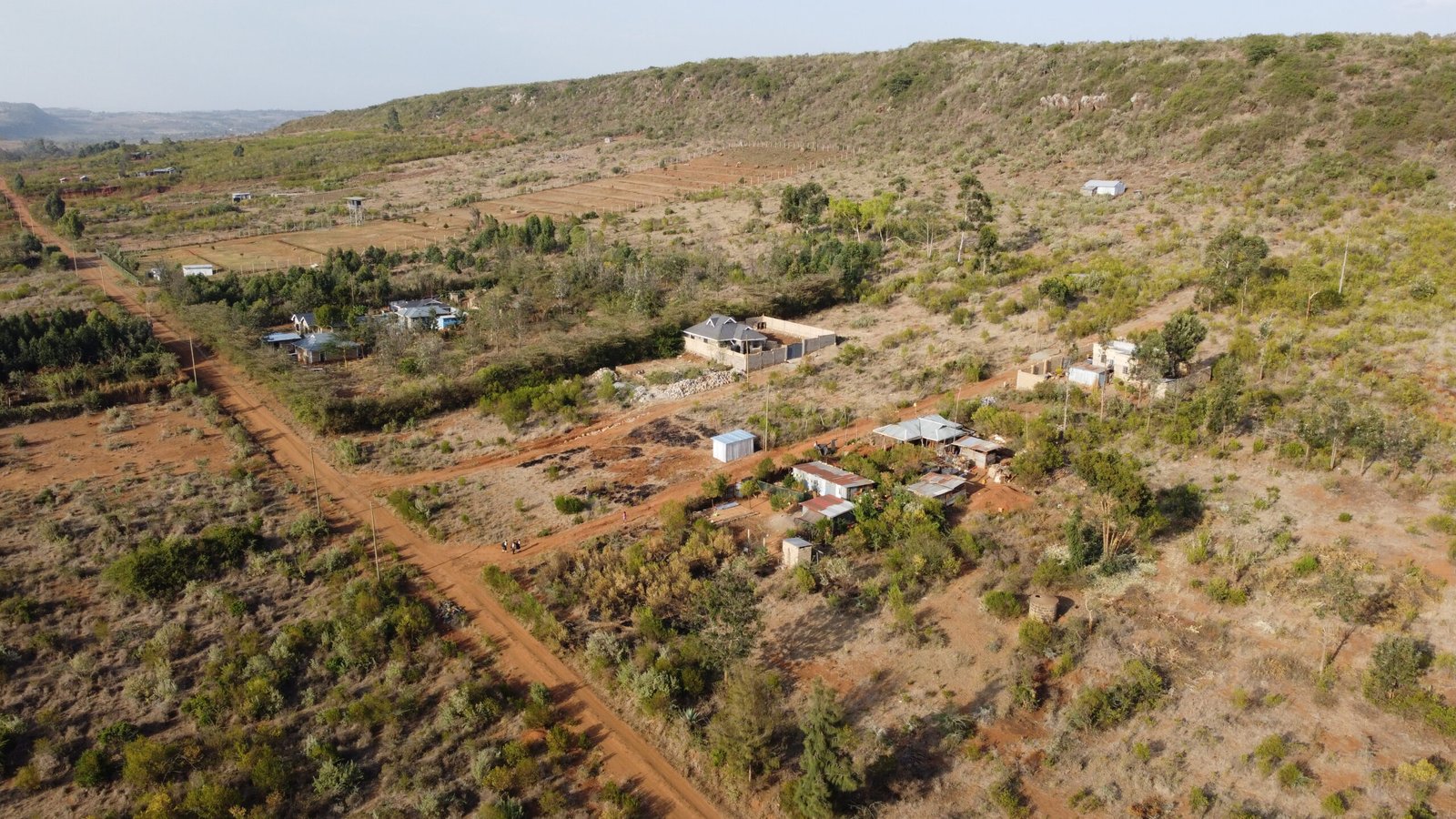
Many first-time buyers now look at the metropolitan edges of Nairobi, such as Kikuyu, Ngong and Kitengela, where plots are still affordable but the city is close. See our guide to plots for sale in Kikuyu for an example of what to look for.
Step 3: Visit the land
Never buy land you or someone you trust has not seen. On the site visit, walk the plot, ask to be shown the beacons (the concrete markers at each corner), check the access road, and talk to neighbours. Ask them how long they have lived there and whether there have been any disputes.
If you live abroad, ask for a live video call where the seller walks you around the actual plot, not just the general area.
Step 4: Do an official land search
This is the step you must never skip. An official search at the land registry tells you:
- who the registered owner is
- the size of the land
- whether there is a bank charge (loan), caution or restriction on it
Searches are done online through Ardhisasa or eCitizen, depending on which registry holds the land, and cost about KSh 500. Ask the seller for a copy of the title, then run the search yourself or through your advocate. Read our full guide on how to do a land search in Kenya.
Step 5: Check the survey and boundaries
The title shows ownership, but the survey map shows where the land actually is. Ask for the registry index map (RIM) or deed plan and compare it to what you saw on the ground. For a plot inside a subdivided estate, ask for the mutation form or survey plan that created your plot number.
Step 6: Agree the price and sign a sale agreement
Once the checks are clean, agree the price, payment plan and completion date in writing. A proper sale agreement states:
- the names and ID numbers of buyer and seller
- the land reference or title number
- the price and how it will be paid
- who pays which costs
- what happens if either side fails to complete
Have an advocate prepare or review it. Many land companies, including Estbo, prepare a standard agreement for every buyer.
Step 7: Pay safely
Always pay into a verified account, never in cash, and keep every receipt. If you are buying from a company, confirm the account by calling the company’s official number, not a number sent to you by someone else. Fraudsters often pretend to be land companies and send fake payment details.
Step 8: Transfer and registration
After full payment, the seller signs the transfer form and hands over the documents needed for registration. Depending on the land, these can include the original title, Land Control Board consent (for agricultural land), rates or rent clearance, KRA PIN copies, ID copies and passport photos.
The buyer pays stamp duty, which is 4% of the value in municipalities and 2% in rural areas, before the transfer is registered. Our guide to stamp duty in Kenya explains how it is worked out.
Step 9: Collect your title deed
Once registered, a new title deed is issued in your name. Do one last official search to confirm the land now shows you as owner. Keep the title somewhere safe, and keep copies of every document from the purchase.
How much does it really cost?
Budget for more than the price of the plot. Typical extra costs include stamp duty, legal fees, the search fee, valuation, registration and, sometimes, Land Control Board consent. Together these can add several percent to the price. Some companies, Estbo included, quote one all-inclusive price that already covers survey, beacons, transfer and legal fees, which makes budgeting much easier.
Common mistakes to avoid
- paying a deposit before doing a search
- buying from someone who is not the registered owner
- trusting photos instead of visiting
- skipping the sale agreement because the seller is a relative or friend
- forgetting to budget for transfer costs
Looking for a titled plot near Nairobi?
Estbo Properties sells titled 50×100 plots in Nachu, Kikuyu from KSh 800,000, all inclusive, with your title deed transferred within four weeks of final payment. Site visits are free.
See available plots →Book a free site visitFrequently asked questions
How long does it take to buy land in Kenya?
A straightforward purchase with clean documents can be completed in a few weeks. Transfers that need Land Control Board consent, subdivision or succession take longer.
Can I buy land without a lawyer?
It is legal, but not wise. An advocate checks the documents, prepares the agreement and handles the transfer, which protects you if something goes wrong.
What is the safest way to buy land in Kenya?
Visit the land, do your own official search, confirm the survey, sign a written agreement, pay only into verified accounts and make sure the transfer is registered in your name.
Talk to Estbo
Get plot prices and a free site visit
Leave your details and our team will call or WhatsApp you, in your time zone if you’re abroad.
Ready to start your land ownership journey with confidence?
- 📱WhatsApp: Estbo Properties (+254 794 000 022)
- 📞Nairobi Office: +254 794 000 022
- 🌍Diaspora Desk (24 hrs): WhatsApp +254 794 000 022
- ✉️Email: invest@estboproperties.com
- 📍Office: Longet Building, Ground Floor, Room 3, next to Kingdom Bank, Kawangware, Nairobi
- 🌐Website: estboproperties.com
Your land, your title, your future. It starts with one conversation.
Leave a Reply